Tox’s Tale: A Story of Unseen Consequences from Waste and Combustion
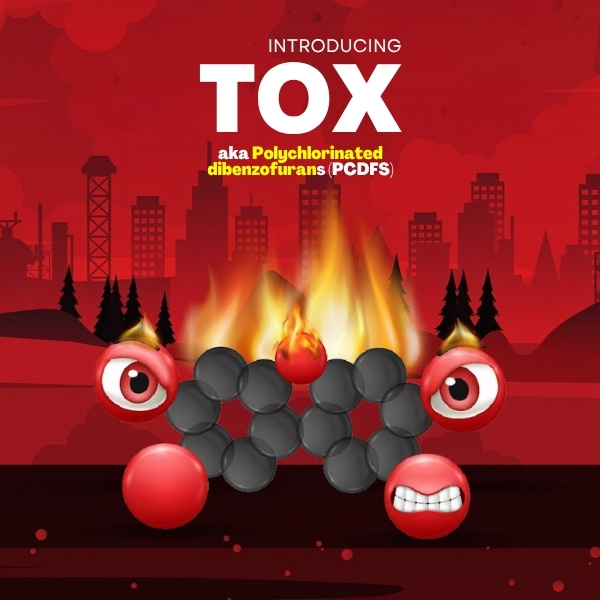
In our series on Unintentional Persistent Organic Pollutants (UPOPs), we now turn our attention to a notorious character – Tox, who represents Polychlorinated Dibenzofurans (PCDFs). Tox’s story is intricately tied to human activities, particularly waste management, and industrial processes, highlighting the complex relationship between our daily habits and environmental health.
Who is Tox?
Tox symbolizes PCDFs, a group of chemical compounds that are not intentionally produced but are often by-products of combustion and certain industrial processes. Like his relatives in the UPOP family, Tox is a persistent character, one who refuses to leave the environment once he has entered it. He is typically found in areas impacted by waste incinerators, vehicle exhausts, and during the production of PCBs (Polychlorinated Biphenyls).
The Problems Caused by Tox
Tox’s presence in our environment and its implications are multifaceted:
Environmental Persistence: Tox can remain in the environment for extended periods, resisting natural degradation processes and affecting various ecosystems.
Bioaccumulation: Tox accumulates in the food chain, which means that his impact can magnify as it moves up from smaller organisms to larger predators, including humans.
Health Implications: Exposure to compounds like Tox has been linked to serious health risks, including potential carcinogenic effects and other chronic health conditions.
Solutions to Address the Tox Challenge
Combating the adverse effects of Tox involves a strategic approach encompassing prevention, regulation, and innovation:
Improved Waste Management: Reducing reliance on waste incineration and promoting recycling and safe disposal methods can significantly decrease the generation of PCDFs.
Regulatory Measures: Implementing stringent regulations on industrial emissions and monitoring compliance can help control the release of compounds like Tox into the environment.
Public Awareness and Education: Informing the public about the sources and dangers of PCDFs is crucial in fostering a more environmentally conscious society.
Benefits of Reducing Tox
Minimizing Tox’s presence in our environment yields substantial benefits:
Healthier Ecosystems: Reduction in PCDFs like Tox contributes to healthier ecosystems, particularly aquatic environments where these compounds often accumulate.
Improved Public Health: Lower exposure to Tox and similar compounds lead to better overall health outcomes for communities.
Sustainable Industrial and Urban Practices: Efforts to address Tox encourage more sustainable practices in both industry and urban development, leading to a cleaner, greener future.
The Human Connection
Tox’s story is a stark reminder of the unintended consequences of our industrial and urban lifestyles. It emphasizes the need for responsible decision-making in both policy and personal habits. In confronting Tox and his impact, we are reminded of our collective responsibility to protect our planet and its inhabitants.
In Conclusion
Tox, representing PCDFs, is more than just a chemical compound; he is a symbol of the challenges we face in balancing industrial progress with environmental stewardship. His story encourages us to look closer at our actions and their repercussions on the world around us. By understanding Tox and working to minimize his presence, we take important steps towards a healthier, more sustainable world.
In the larger narrative of UPOPs, Tox serves as a crucial chapter, underscoring the need for awareness, action, and innovation in our ongoing environmental journey.