Diox’s Dilemma: The Invisible Menace of PCDDs
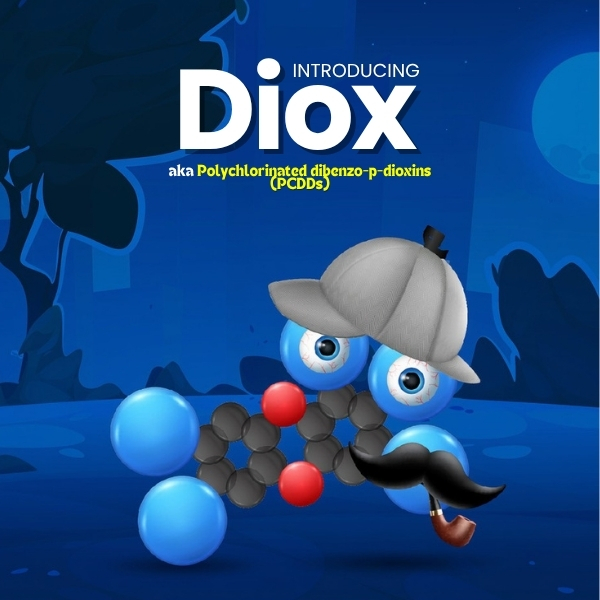
As we continue our journey through the realm of Unintentional Persistent Organic Pollutants (UPOPs), we meet Diox, the character embodying Polychlorinated dibenzo-p-dioxins (PCDDs). Unlike some of his counterparts, Diox’s story is less about direct industrial use and more about the unintended consequences of various human activities.
Who is Diox?
Diox represents PCDDs, a group of chemically related compounds often formed unintentionally through industrial processes, particularly those involving chlorine, or through the burning of organic matter in the presence of chlorine. Diox’s character, symbolically blind, reflects the often unseen and unnoticed nature of these pollutants in our environment.
The Problems Caused by Diox
The issues surrounding Diox are both insidious and far-reaching:
Environmental Persistence: Diox, like other PCDDs, is highly persistent in the environment. This means he can remain in the soil and water for many years, continuing to pose risks long after his initial formation.
Bioaccumulation: Diox accumulates in the fatty tissues of animals and humans. Over time, even lesser amounts can build up to dangerous levels.
Health Risks: Exposure to Diox has been linked to severe health issues, including reproductive and developmental problems, immune system damage, and an increased risk of cancer.
Solutions to Combat Diox
Efforts to tackle the challenge posed by Diox involve a combination of technological, regulatory, and educational approaches:
Improved Combustion Practices: Since PCDDs like Diox are often formed during combustion, improving industrial combustion techniques can significantly reduce their formation.
Regulation and Monitoring: Implementing strict regulations on emissions and waste, and monitoring for the presence of PCDDs, are crucial steps in mitigating their impact.
Public Awareness and Prevention: Educating the public about the sources and dangers of PCDDs and promoting preventative measures can play a key role in reducing their presence in the environment.
Benefits of Reducing Diox
The successful management and reduction of Diox in our environment bring several benefits:
Healthier Ecosystems: Reducing the presence of PCDDs helps protect ecosystems, particularly aquatic environments where these compounds can accumulate.
Safer Food Supply: As Diox can enter the food chain, minimizing its levels in the environment contributes to safer food sources for both wildlife and humans.
Reduced Health Risks: Lowering the exposure to PCDDs leads to better public health outcomes and lessens the burden on healthcare systems.
The Human Connection
Diox’s story is a poignant reminder of the unseen impacts our actions can have on the environment. It highlights the importance of being aware of and responsible for the by-products of our industrial and everyday activities.
In Conclusion
Diox, or PCDDs, represents a significant environmental challenge, but also an opportunity for change. By understanding the sources and impacts of these pollutants, we can make informed decisions to reduce their presence in our environment. Diox’s story is a call to action, urging us to consider the broader implications of our actions and to strive for a cleaner, healthier world.
In the collective narrative of UPOPs, Diox stands as a reminder of the invisible dangers lurking in our environment and the need for vigilance and responsibility in our pursuit of progress.