Polly’s Paradox: The Persistent Challenge in Our Waters
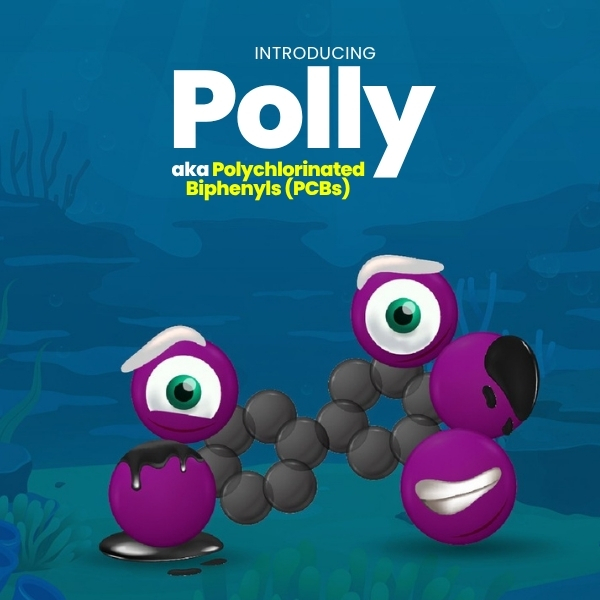
Continuing our exploration of the characters that embody Unintentional Persistent Organic Pollutants (UPOPs), we encounter Polly, representing Polychlorinated Biphenyls (PCBs). Polly’s tale is particularly poignant, highlighting the complex interplay between industrial utility and environmental responsibility.
Who is Polly?
Polly, the personification of PCBs, began her journey as a marvel of industrial chemistry. Used extensively for their stability and heat resistance in various applications, PCBs like Polly were once celebrated for their effectiveness in electrical equipment, heat exchangers, and more. However, as the environmental narrative unfolded, Polly’s story took a darker turn, revealing the unintended consequences of her widespread use.
The Problems Polly Poses
Polly’s impact on the environment and human health is multifaceted and significant:
Environmental Persistence: Polly is notoriously persistent, resisting natural breakdown processes, leading to long-term contamination, particularly in aquatic ecosystems.
Bioaccumulation: Polly tends to accumulate in living organisms, climbing up the food chain and potentially causing significant health issues in wildlife and humans.
Health Risks: Exposure to PCBs like Polly has been linked to various adverse health effects, including reproductive disorders, endocrine disruption, and increased cancer risk.
Solutions to the Polly Problem
Addressing the environmental and health challenges posed by Polly requires a concerted effort across multiple fronts:
Phasing Out and Removal: One of the most effective strategies has been the global phasing out of PCBs, including the removal and safe disposal of existing PCB-containing equipment.
Environmental Remediation: Cleaning up PCB-contaminated sites, particularly in aquatic environments, is crucial to reducing Polly’s impact on ecosystems.
Public Health Initiatives: Raising public awareness about the risks associated with PCBs and monitoring their levels in the environment helps in mitigating their impact on human health.
Benefits of Addressing PCBs
Efforts to minimize the presence and impact of PCBs in the environment yield significant benefits:
Healthier Ecosystems: Reducing PCB contamination supports the recovery and health of affected ecosystems, particularly marine and freshwater habitats.
Improved Public Health: Minimizing exposure to PCBs contributes to better overall health outcomes for communities, particularly those in proximity to contaminated sites.
Sustainable Practices: The drive to address PCBs has spurred more sustainable and environmentally friendly practices in industries that once relied on these chemicals.
The Human Connection
Polly’s story is more than a chemical tale; it reflects our societal choices and their lasting impact on the environment. In tackling the challenges posed by PCBs, we confront the consequences of our industrial actions and are reminded of our responsibility to the planet.
In Conclusion
Polly’s narrative, while cautionary, also embodies hope. It shows that through awareness, innovation, and action, we can address the mistakes of our industrial past and pave the way for a cleaner, safer future. As we continue to learn from Polly’s story, let us strive for a world where our industrial activities coexist in harmony with our environmental responsibilities.
In our journey towards a sustainable future, the story of Polly and her counterparts is a critical chapter, reminding us of the delicate balance we must maintain with our natural world.