
Meeting Hex: The Challenge of Hexachlorobenzene and Our Path to a Cleaner Future
In the intricate tapestry of our Caribbean environment, certain characters play more sinister roles than others. One such character is Hex, short for Hexachlorobenzene (HCB). While his origins lie in benign intentions, the story of Hex is a cautionary tale about the unintended consequences of chemical use in agriculture and industry.
Who is Hex?
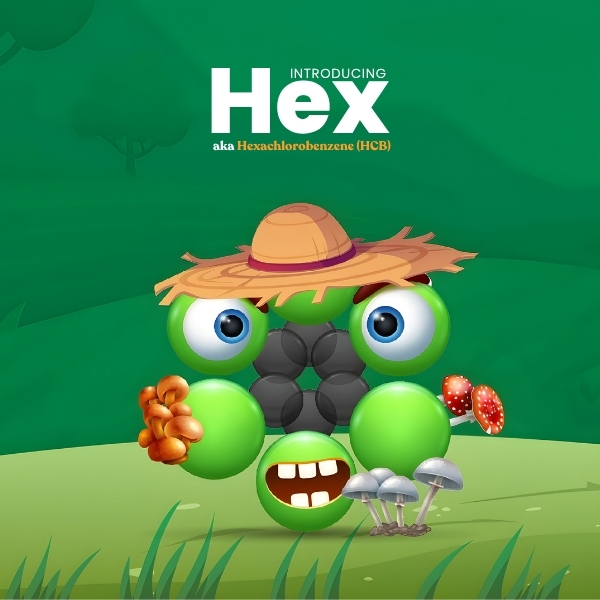
Hexachlorobenzene, renamed Hex, began his journey as a fungicide, primarily used in agriculture. Introduced to battle fungi that threatened crops, Hex was once hailed as a savior of sorts, protecting food sources and ensuring agricultural success. However, this initial benefit masked a darker reality.
Hex belongs to the family of Unintentional Persistent Organic Pollutants (UPOPs), chemicals that linger in the environment, resist degradation, and accumulate in the food chain. Over time, the narrative around Hex shifted as the environmental and health impacts of his persistence became clear.
The Problems Caused by Hex
The issues surrounding Hex are multifaceted, impacting both ecosystems and human health. Here are some of the key concerns:
Environmental Persistence: Hex does not break down easily. He lingers in soil and water, traveling through ecosystems and entering the food chain.
Bioaccumulation: Hex accumulates in the tissues of living organisms. Over time, even lesser amounts can build up to harmful levels in wildlife and humans.
Health Risks: Exposure to Hex has been linked to various health issues. These include hormonal disruptions, reproductive problems, and increased cancer risk. Hex’s presence in the environment thus poses a silent but significant health threat.
Solutions to Eradicate Hex
Combating Hex requires a multifaceted approach, encompassing both prevention and remediation.
Banning and Phasing Out: One of the most direct methods of reducing Hex’s impact is through the banning and phasing out of his use in agriculture and industry. This approach has been adopted in many countries, leading to a decline in new HCB emissions.
Environmental Cleanup: Where Hex has already contaminated sites, environmental cleanup efforts are crucial. This involves identifying contaminated areas and employing methods to remove or neutralize the pollutant.
Alternative Agricultural Practices: Encouraging and adopting sustainable agricultural practices that do not rely on harmful chemicals like Hex is essential. This includes using organic fungicides and implementing integrated pest management strategies.
Benefits of Eradicating Hex
Eliminating Hex from our environment brings numerous benefits, reflecting a healthier ecosystem and a safer world for humans.
Improved Environmental Health: Without Hex, ecosystems can recover and thrive. This leads to healthier soil and water, benefiting all forms of life.
Reduced Health Risks: Minimizing exposure to Hex cuts down the risk of associated health issues. Populations, especially those in agricultural areas, would see a decrease in the incidence of diseases linked to HCB exposure.
Sustainable Agriculture: Moving away from chemicals like Hex paves the way for more sustainable agricultural practices. This not only benefits the environment but also supports long-term food security and farmer wellbeing.
The Human Connection
The story of Hex is not just a tale of a chemical; it is a narrative about human ingenuity, its unintended consequences, and our ongoing responsibility to the planet. It is a reminder that the solutions we seek today must be viewed through the lens of long-term impact.
In our fight against Hex, we are not just combating a pollutant; we are redefining our relationship with the environment. It is about making choices that respect the delicate balance of our ecosystems and safeguard our health.
The eradication of Hex from our environment is a step towards a future where our actions align with the needs of the planet. It is a journey towards sustainability, where each step, no matter how small, contributes to a larger goal – a healthier, cleaner world.
In Conclusion
Hex’s story is a chapter in the larger book of environmental stewardship. It is a narrative that intertwines science, health, and ethics. As we continue to author this story, let us choose paths that lead to positive endings – for our environment, for our health, and for future generations. Let us work together to ensure that characters like Hex find their place not in our fields and waters, but in the pages of history, as challenges we overcame in our quest for a sustainable world.
Remember, in the vast ecosystem of our planet, every action counts. By understanding and addressing the challenges posed by substances like Hex, we can create a legacy of health and harmony with nature.